M1: Hindustronic Live
Carlos Guedes
NYU Abu Dhabi
Carlos Guedes has a multifaceted activity in composition and sound design counting numerous commissioned projects for dance, theatrical performance, film, and interactive installations besides conventional concert music. He counts more than 80 premieres internationally, having presented work in places such as Expo’98, Expo 2020, European Capital of Culture 2001 and 2012, ArCo, De Waag, Ars Electronica, ICMC, SMC, SIGGPRAH, Judson Church, Shangai eArts, The Kitchen, National Theater S. João, Casa da Música, Beijing Modern Music Festival, and Asia Culture Center. His music is eclectic, combining influences that range from industrial to carnatic music, from western erudite traditions to trans-cultural free improvisation, always using computational technologies as tools for further expanding musical expression.
Guedes also develops a parallel activity as a researcher, focusing on the development of generative computational technologies for music performance, composition, and improvisation. He is one of the founders of the Music and Sound Cultures (MaSC) research group at NYU Abu Dhabi, a group that develops hybrid methodologies blending computational and humanistic approaches for the understanding of the music from the Gulf, East Africa, and South India. Home to several funded projects that develop their research agenda, a central aspect to the group’s activities is the development of novel computational tools (such as VR environments and games) for promoting interaction and enculturation with music from this region.
Carlos Guedes holds a PhD (2005) and MA (1996) in composition from New York University and a BM (1993) from ESMAE-IPP (Porto, Portugal). He is currently Associate Professor of Music and Affiliated Associate Professor in Computer Engineering at New York University Abu Dhabi and Affiliated Associate Professor of Music in Music Technology at NYU Steinhardt.
During the pandemic lockdown, musicians Carlos Guedes and Kaustuv Ganguli started testing online music making software to check which technologies were (still) around and engaged in a project involving colleagues and students from NYU Abu Dhabi called Hindustabic Electronica. This project used the online medium to explore how elements from Hindustani, Arabic, and Electronic music could coexist musically. This group ended up doing more than 15 live online performances. Examples of these performances can be seen here and here.
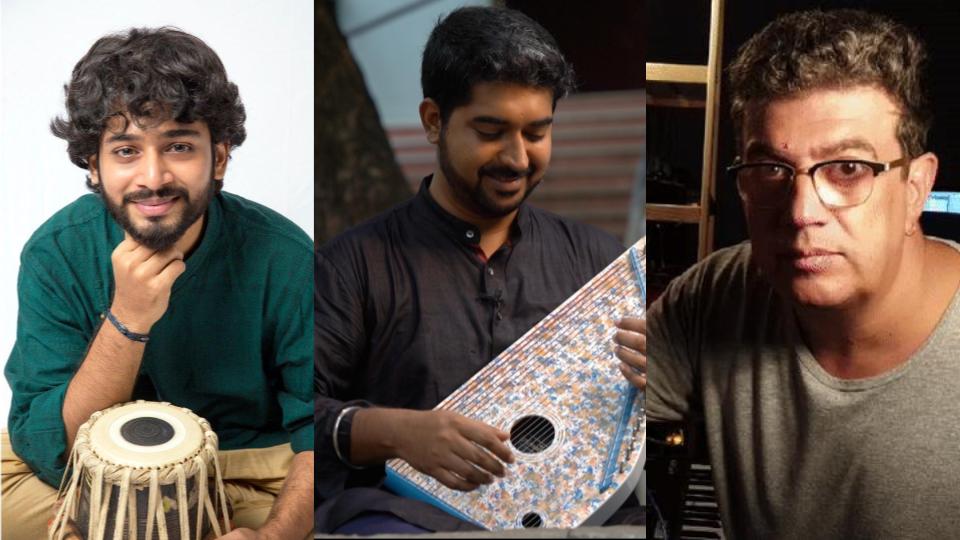
Our proposal for ISMIR 2022 is a reduced version of this ensemble, performing live with Kaustuv Ganguli on vocals, Carlos Guedes on live electronics, and a tabla player to be designated. This would fall equally in categories Live Ensemble and Cross-Cultural collaborations. The performance will last 10 minutes at the most.